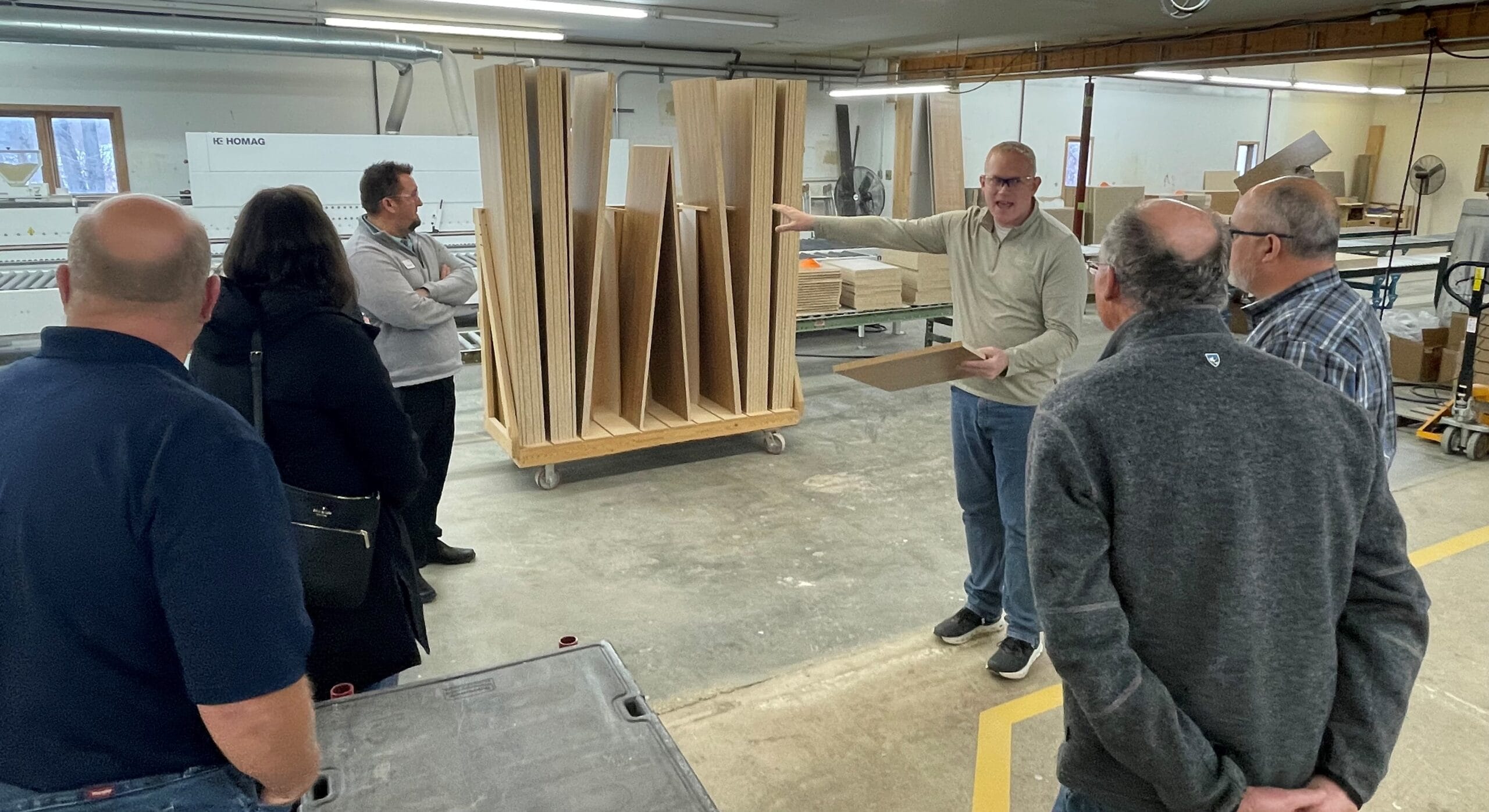
Business Retention & Expansion (BRE) programs are used by economic developers across the country to collect vital information from businesses including opportunities for expansion, challenges or barriers to growth, and input on community resources and amenities. The GFMEDC uses business responses to prioritize how we can support in the short-term, while collecting long-term aggregate data that provides useful insight into the economic trends our region is experiencing.
In 2025, the GFMEDC completed projects with 17 primary-sector companies, resulting in $3 billion in capital investment, 304 projected new jobs, and nearly 2 million square feet in facility expansion – many of these resulting from relationships developed through BRE visits and surveys.
The GFMEDC completed 152 strategic company engagements and provided direct assistance to 90 companies, including connecting businesses to financing, workforce pipelines, and visibility that help fuel their growth.
In 2025, the GFMEDC surveyed 85 primary-sector companies and found that 60% of the companies have expansion plans within one to two years. While that percentage is down from 77% in 2024, the majority of companies expanding is positive on the whole and is further proof that our region is resilient and growing.
Explanation of primary sector
A primary-sector business is one which, through the employment of knowledge or labor adds value to a product, process, or service which results in the creation of new wealth. A majority of its revenue must be derived from outside of the state. A primary-sector company can have two employees or two-thousand; they can do their work anywhere in the world and are not tied to a geographic location.
Primary-Sector Certification
Primary-sector certification is a designation administered by the North Dakota Department of Commerce.
Once you fill out the two-page form, application approval usually takes three to four weeks.
Each year, we wrap our BRE program up with an aggregated report on what our regional primary-sector companies are reporting.
The reports include:
The Minding Our Own Business(es) program continues to evolve to meet the demands of primary-sector businesses throughout the region. In 2025, the GFMEDC team developed and implemented a new benchmarking system for manufacturing companies, which shares customized reports comparing a company’s responses to the aggregated datasets of their industry peers and all primary-sector companies over the past year.
The benchmarking reports provide manufacturing companies with actionable data insights, enabling them to compare performance and growth potential against industry peers and the broader primary-sector market. The reports include analysis of potential capital investment, job creation, and real estate expansion, alongside insights into workforce satisfaction, hard-to-fill positions, employee attraction and retention strategies, and community-driven barriers to growth. The flip-side of the Industry Benchmark Report also includes commonly accessed programs and a link to our Smartbook.
The GFMEDC’s business retention and expansion (BRE) work puts us in direct, ongoing conversation with the region’s primary-sector businesses, and that intelligence doesn’t stop at economic development.
Through our partnership with The Chamber, the firsthand insights we gather from local employers directly inform and strengthen public policy advocacy efforts, helping to ensure that the legislation shaping our business environment reflects the real needs and priorities of the companies driving our regional economy.









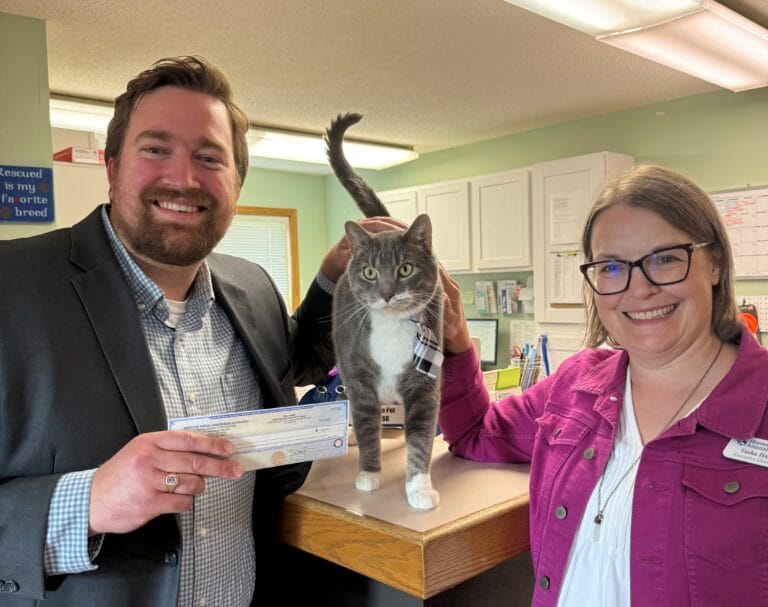
To encourage a higher rate of return on our BRE surveys, we donate $25 to the charity the company chooses.
This allows the GFMEDC’s commitment to human flourishing to extend to our charitable partners who are working for the greater good.
The GFMEDC has donated more than $11,700 since 2021 to organizations including the United Way of Cass-Clay, Homeward Animal Shelter, Ronald McDonald House, Roger Maris Cancer Center, Great Plains Food Bank, and the Jeremiah Program.